Japanese has three writing systems: hiragana, katakana, and kanji. Additionally, Japanese words can be classified into several categories (word types) including native Japanese words (wago), Chinese-origin words (kango), and loanwords (gairaigo). Katakana words are loanwords, which are foreign words from English and other languages that have been adopted into Japanese. Many katakana words are used in caregiving settings and national examinations, but many Japanese learners find katakana words “difficult to understand” and “hard to pronounce.”
This article introduces several effective learning methods for katakana words, particularly for Japanese learners involved in the nursing care industry.
Contents
① Why Katakana Words Are Difficult
② Effective Learning Methods for Katakana Words
③ Let’s Try It Out!
④ Summary: Every Day, Little by Little, Keep Going!
⑤ Challenge Questions
Contents:
① Why Katakana Words Are Difficult
Katakana is a phonetic script that represents sounds and doesn’t carry meaning like kanji characters. Unlike kanji, where you can infer meaning, many Japanese learners find katakana words hard to learn and hard to remember. So why do Japanese learners find katakana words so challenging?
1. Difficult Pronunciation
Katakana words are based on foreign languages such as English, German, and Portuguese (loanwords), but when written in Japanese katakana, the pronunciation often differs from the original word.
| Katakana | Original Language | Alphabet |
|---|---|---|
| ウイルス (uirusu) | English | Virus |
| タオル (taoru) | English | Towel |
| コップ (koppu) | Dutch | Kop |
| パン (pan) | Portuguese | Pão |
Additionally, katakana words often include small characters like ッ, ャ, ュ, ョ and the long vowel mark ー, which takes time to master.
Examples: スリッパ (slippers) / ボディシャンプー (body shampoo) / クリームシチュー (cream stew) / コミュニケーション (communication) / リーダー (leader)
2. Limited Learning Opportunities
There aren’t many katakana words in beginner-level Japanese textbooks.
- “Minna no Nihongo” I & II: Only 185 katakana words out of approximately 1,980 words
- “Genki” I & II: Only 191 katakana words out of approximately 1,774 words
Source: Ogiso (2022) “Analysis of Beginning and Intermediate Textbooks from the Perspective of Katakana Learning”
3. Many Similar-Looking Characters
Katakana has many similar-looking characters that are easy to confuse, such as: ウ / ワ, ク / タ, シ / ツ, ソ / ン, チ / テ
This makes katakana words difficult to read and can be discouraging for Japanese learners.
② Effective Learning Methods for Katakana Words
Learning katakana words is not only necessary for living in Japan but also essential for working and studying in the nursing care industry. Then, what methods can help you learn katakana words?
1. Start with Commonly Used Katakana Words
Words you see and hear frequently in daily life and work are easier to remember and harder to forget. Start by learning the katakana words around you.
| Facility Locations | Words Used in Nursing Care |
|---|---|
| エントランス (entrance) スロープ (slope) ホール (hall) ユニット (unit) ロビー (lobby) |
バイタルチェック (vital check) カンファレンス (conference) ケアプラン (care plan) ナースコール (nurse call) リハビリテーション (rehabilitation) |
2. Group by Situation
Organizing katakana words by situation helps group commonly used words together, making them easier to remember.
| Situation | Kanakana Word Examples |
|---|---|
| Care Work | アセスメント(assessment)、ケアスタッフ(care staff)、シフト(shift)、ミーティング(meeting)、リーダー(leader) |
| Care Facility | カート(cart)、キャビネット(cabinet)、スリッパ(slippers)、ソファー(sofa)、タイムカード(time card) |
| Bathing | コンディショナー(conditioner)、シャワー(shower)、シャンプー(shampoo)、チェアー(chair)、バスタオル(bath towel) |
| Toileting | ウォシュレット(washlet)、パッド(pad)、ハンドソープ(hand soap)、ポータブルトイレ(portable toilet)、オムツ(diaper) |
| Meals | ダイニング(dining)、テーブル(table)、ナプキン(napkin)、フォーク(fork)、メニュー(menu) |
3. Learn Similar-Looking Katakana Words Together
Learning easily confused, similar-looking katakana words by comparing them helps clarify the differences.
| ウ and ワ | Examples |
|---|---|
| ウ | ウェットティッシュ(wet tissue)・ウォーカーケイン(walker cane)・ウォーキング(walking) |
| ワ | ワイシャツ(dress shirt)・ワークショップ(workshop)・ケアワーカー(care worker)・シャワー(shower) |
| ク and タ | Examples |
|---|---|
| ク | クリーニング(cleaning)・クローゼット(closet)・タクシー(taxi)・コンタクトレンズ(contact lens) |
| タ | タイマー(timer)・ボタン(button)・セーター(sweater)・タクシー(taxi)・コンタクトレンズ(contact lens) |
| シ and ツ | Examples |
|---|---|
| シ | シルバーカー(rollator)・シューズ(shoes)・ショートステイ(short stay)・シーツ(sheets)・シャツ(shirt) |
| ツ | タイツ(tights)・フルーツ(fruits)・リハビリパンツ(rehabilitation pants/pull-up diapers)・シーツ(sheets)・シャツ(shirt) |
| ソ and ン | Examples |
|---|---|
| ソ | ソファー(sofa)・ソックス(socks)・ソース(sauce)・パソコン(computer)・コンソメスープ(consommé soup) |
| ン | ダイニング(dining)・リネン(linen)・スプーン(spoon)・パソコン(computer)・コンソメスープ(consommé soup) |
| チ and テ | Examples |
|---|---|
| チ | チケット(ticket)・チームワーク(teamwork)・スイッチ(switch)・ボディチェック(body check) |
| テ | テーブル(table)・テレビ(TV)・テキスト(textbook)・カステラ(castella; Japanese sponge cake)・ステレオ(stereo) |
4. Practice Listening
Practice listening for katakana words from TV, internet videos, and conversations with Japanese people. Instead of just listening, always take notes and look up the meanings later.
5. Find a Method That Works for You
Everyone learns differently. Try creating flashcards or katakana word lists and experiment to find the method that works best for you.
•Learn with photos or illustrations
ホッチキス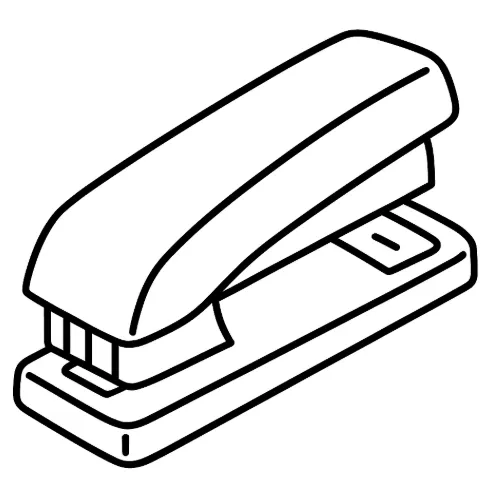 |
フォーク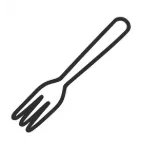 |
ストローマグ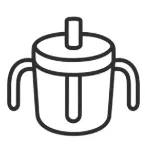 |
カーディガン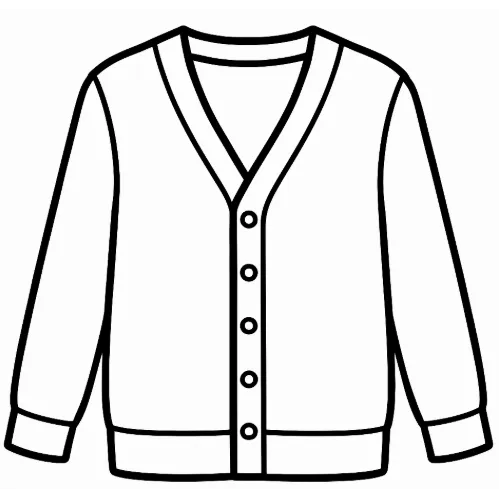 |
ポータブルトイレ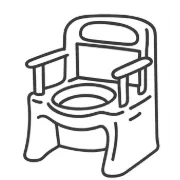 |
スリッパ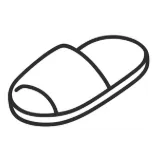 |
エレベーター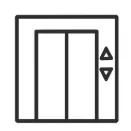 |
エスカレーター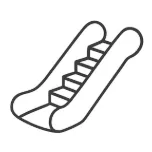 |
スロープ |
•Learn together with Japanese synonyms
| エプロン(apron) = 前掛け | ミルク(milk) = 牛乳 | トイレ(toilet) = お手洗い |
| スプーン(spoon) = (お)匙(さじ) | タオル(towel) = てぬぐい | エントランス(entrance) = 入口 |
6. Learn in Context
Understanding the context by reading sentences makes words easier to remember.
(1) 今日の誕生日パーティーは、2階のフロアで行います。
Today’s birthday party will be held on the 2nd floor.
(2) エレベーターで1階のロビーまで来てください。
Please come to the 1st floor lobby by elevator.
(3) スタッフとのコミュニケーションが大切です。
Communication with staff is important.
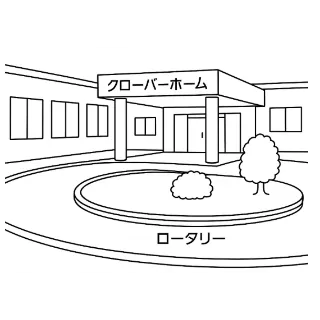
(4) エントランスの前にロータリーがあります。
There is a rotary in front of the entrance.
(5) ボールペンでノートに答えを書きます。
Write the answer in your notebook with a ballpoint pen.
7. Be Careful with Japan-Only Katakana Words
Japan has unique katakana words whose meanings differ from the original foreign language meanings.

Example 1) この喫茶店は、午前10時までモーニングがあります。
This coffee shop has morning set until 10AM.
「モーニング」➡ A breakfast set with toast and eggs
Example 2) 父はサラリーマンです。
My father is a salaryman.
「サラリーマン」➡ A male company employee
Example 3) ランチのコーヒーはサービスです。
Coffee comes as a complimentary service with lunch.
「サービス」➡ Free/complimentary
Example 4) 利用者からクレームがあった。
There was a complaint from a resident.
「クレーム」➡ A complaint about something troubling or unpleasant
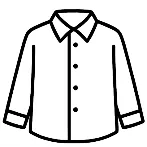
Example 5) 明日は会議があるので、ワイシャツを着ます。
I’ll wear a dress shirt tomorrow because there’s a meeting.
「ワイシャツ」➡ A dress shirt worn under a suit
③ Let's Try It Out!
Learn katakana words in your daily life and work. Since you live in Japan and work with Japanese people, it’s important to ask nearby staff members when you encounter unfamiliar katakana words.
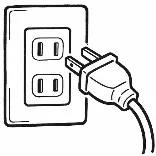 Example 1) コンセント
1. (See/Hear) コンセント
2. (Write) Take notes in a notebook
3. (Research) Look it up in a dictionary or ask a Japanese person:
「コンセントとは、どういう意味ですか」 (What does “コンセント”mean?)
➡ Meaning: An electrical outlet where you plug in electronic devices.
4. (Speak/Use) Try making a sentence
➡「アイロンを使うので、コンセントにさしてください」
I am going to use the iron, so please plug it into the outlet.
Example 2) ショートステイ
1. (See/Hear) ショートステイ
2. (Write) Take notes in a notebook
3. (Research) Look it up in a dictionary or ask a Japanese person:
「ショートステイって、どういう意味ですか 」(What does “ショートステイ”mean?)
➡ Meaning: A service where someone stays at a care facility for a short period.
4. (Speak/Use) Try making a sentence
➡「鈴木さんは、ショートステイを利用しています」
Mr./Ms. Suzuki is using short stay services
「10時にショートステイの方が到着します。203号室の準備をお願いします」
The short stay guest will arrive at 10:00. Please prepare room 203
Example 3) ベッドセンサー
1. (See/Hear) ベッドセンサー
2. (Write) Take notes in a notebook
3. (Research) Look it up in a dictionary or ask a Japanese person:
「ベッドセンサー」って、どういう意味ですか (What does “ベッドセンサー”mean?)
➡ Meaning: A device that alerts staff when a resident stands up, gets out of bed, or moves (a sensor to prevent falls).
4. (Speak/Use) Try making a sentence
➡「ベッドセンサーが鳴ったので、居室へ行きました」
I went to the room because the bed sensor went off.
④ Summary: Every Day, Little by Little, Keep Going!
If you study 3 words per day × 30 days (about 1 month), you can learn “approximately 100 katakana words”. You don’t need to memorize many words at once. For katakana words you see and hear in daily life: “Write → Research → Speak/Use”!
By continuing little by little every day, you will definitely improve. Let’s keep trying!
⑤ Challenge Questions
Let’s try these questions to see if you can write katakana words correctly and understand how to use them.
Question 1: Correct the “✕ (incorrect)” katakana words in the table below.
| ✕(Incorrect) | 〇(Correct) |
|---|---|
 例)エスカーレター 例)エスカーレター |
例)エスカレーター |
 1)カーレンダ 1)カーレンダ |
1) |
 2)セーロテップ 2)セーロテップ |
2) |
 3)クツシャン 3)クツシャン |
3) |
 4)ベットポトル 4)ベットポトル |
4) |
 5)ドラーイヤ 5)ドラーイヤ |
5) |
Question 2: Choose words from the box to create correct sentences. Each word can only be used once.
① 誕生日に( )をもらった。
I received ( ) for my birthday.
② 毎朝、( )でニュースを聞きます。
Every morning, I listen to the news on ( ).
③( )の時間に、いっしょにゲームをした。
We played games together during ( ) time.
④( )大会で、歌を歌った。
I sang a song at the ( ) competition.
⑤ この服は( )が大きい。
This clothing has a large ( ).
サイズ ラジオ プレゼント レクリエーション カラオケ
Answer to Challenge Questions
Question 1
| ✕(Incorrect) | 〇(Correct) |
|---|---|
| 例)エスカーレター | 例)エスカレーター |
| 1)カーレンダ | 1)カレンダー |
| 2)セーロテップ | 2)セロテープ |
| 3)クツシャン | 3)クッション |
| 4)ベットポトル | 4)ペットボトル |
| 5)ドラーイヤ | 5)ドライヤー |
Question 2
① 誕生日に( プレゼント )をもらった。
② 毎朝、( ラジオ )でニュースを聞きます。
③( レクリエーション )の時間に、いっしょにゲームをした。
④( カラオケ )大会で、歌を歌った。
⑤ この服は( サイズ )が大きい。
Author Bio: Eri Aoi
Instructor at the International Exchange & Japanese Language Support Y Association.
Since 2011, engaged in educational support for foreign care worker candidates who came to Japan under the EPA (Economic Partnership Agreement).
Currently involved in education for foreign care workers who come to Japan through technical intern training and specified skilled worker programs.
Completed 420-hour Japanese Language Teacher Training Course. Passed Japanese Language Teaching Competency Test. Certified Social Worker.